

Studies show that over 60% of businesses face unplanned downtime each year, leading to lost revenue and damaged reputation. In a cloud-first world, Disaster Recovery isn’t optional; it’s essential to keep operations running. With the rise of VM-based workloads, applications and data must always be on, leaving no room for disruption. Smart DR strategies ensure resilience, protect critical data, and keep your business running without missing a beat. In this blog, we’ll explore Disaster Recovery on Google Cloud, compare Hot and Warm DR strategies, and see how choosing the right approach can keep your business resilient and your data protected.
Strengthen your DR strategy with Niveus
Disaster Recovery can be approached in different ways to match your business needs. Hot DR keeps fully active backup systems running in parallel for near-instant failover and minimal data loss, perfect for mission-critical apps that can’t afford downtime. Warm DR takes a more cost-effective approach, running backups quickly and kicking in when needed, ideal for less critical workloads where brief interruptions are acceptable. Choosing the right strategy ensures your business stays resilient, data remains safe, and operations never skip a beat.
What Is Disaster Recovery on Google Cloud?
Imagine suddenly losing access to your most important data. It could happen because a server failed, a software bug corrupted files, a cyberattack, natural disasters, or even due to a faulty update. Moments like these can bring business operations to a grinding halt.
Disaster Recovery (DR) on Google Cloud protects your data and applications in this precarious time. This way, you can quickly restore them if something goes wrong. Data loss may occur due to hardware failures, software bugs, cyberattacks, or faulty updates. Google Cloud prevents this by constantly syncing and backing up your data. It stores everything in a secure secondary or standby environment. If a failure happens, you can switch to this environment. This way, your systems stay up with minimal disruption.
Google Cloud provides dependable DR tools. These include Backup & DR, Cloud SQL’s high availability, and failover options. GKE workloads also offer multi-region resilience. Together, they ensure your data stays protected and easy to recover at any time.
Not all disaster recovery setups are the same. Depending on your business needs, tolerance for downtime, and budget, you can choose different DR strategies, most commonly, Hot DR or Warm DR.
Hot DR (Active–Active)
Hot DR means having a fully operational backup system that is already running and ready to take over instantly if the main system fails. It continuously replicates all data from the primary environment to a secondary environment (not production) in real time.
Hot DR should be used when your business cannot tolerate even a few seconds of downtime or data loss. It’s ideal for mission-critical systems like payments, banking, healthcare, mobility, and customer-facing apps that must stay online 24/7. If every second of outage impacts revenue, safety, or user experience, Hot DR ensures continuous availability with real-time data replication and instant failover.
Key Characteristics
- Near-zero downtime: Hot DR environments run in parallel with the primary system, enabling instant failover with almost no interruption to users.
- Stringent RTO/RPO: Recovery Time Objective (RTO) and Recovery Point Objective (RPO) are extremely low, often measured in seconds, because data and services are continuously synchronized.
- Higher infrastructure costs: Because both primary and secondary environments remain active, Hot DR requires more compute, storage, and network resources, making it the more expensive DR strategy.
How Google Cloud Supports Hot DR
- Global load balancing: Routes traffic to the nearest active instance and automatically shifts users to the DR environment during failures.
- Cloud SQL/Spanner high availability: Provides cross-region replicas, synchronous replication, and automatic failover for mission-critical databases.
- Traffic director: Enables intelligent service-to-service traffic management and seamless failover for microservices architectures.
- Synchronous replication: Ensures real-time data consistency between primary and DR environments, preventing data loss.
- GKE multi-cluster architecture: Allows applications to run across multiple regions with active–active or active–standby setups for instant failover.
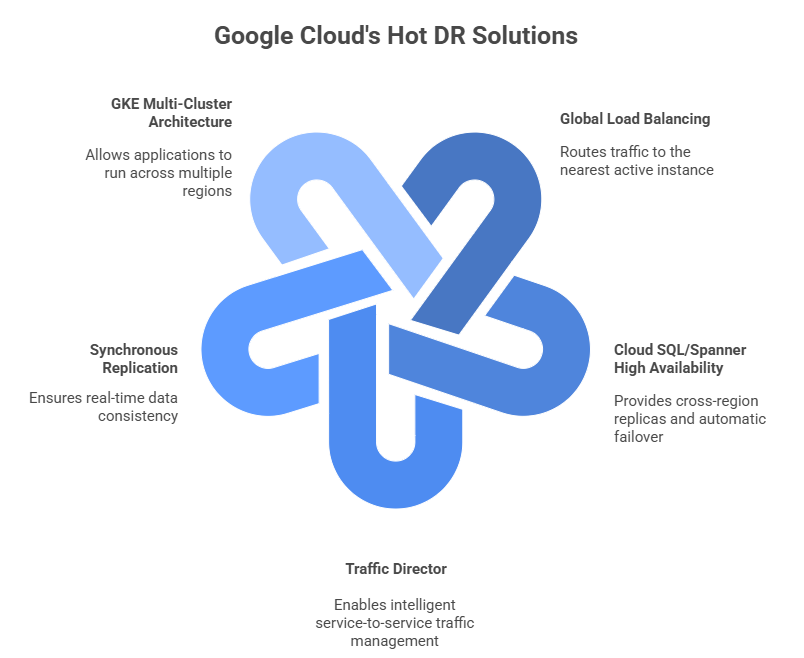
Figure 1: Visual illustration of how Google Cloud supports Hot DR
Warm DR (Active–Passive)
Warm DR means having a backup system that is partially running and ready to take over with minimal configuration or startup time if the main system fails. Data is replicated at regular intervals rather than in real time, so some recent changes may not be immediately available.
Warm DR should be used when your business can tolerate a short downtime or minor data loss. It’s ideal for critical systems such as internal enterprise applications and also reporting platforms, as well as non-critical customer services, where a brief interruption will not cause a major impact. Warm DR provides a balance between cost and availability, offering faster recovery than cold DR without the high infrastructure expense of hot DR.
Key Characteristics
A Warm DR setup strikes a balance between cost and recovery speed. Its main characteristics include:
- Moderate RTO and RPO: Warm DR allows businesses to recover systems in a reasonable time frame without the instant recovery of a hot site. Recovery Time Objective (RTO) and Recovery Point Objective (RPO) are moderate, making it suitable for many business workloads.
- Lower infrastructure cost: Unlike hot DR, you don’t maintain fully active systems at all times. This reduces infrastructure and operational expenses while still providing a reliable backup environment.
- Failover requires orchestration: Switching to the backup environment isn’t automatic. Recovery processes, such as starting services and redirecting traffic, require planned orchestration.
How Google Cloud Supports Warm DR
Google Cloud provides tools and features to implement Warm DR efficiently:
- Snapshots: Capture point-in-time images of virtual machines to restore systems when required instantly
- Scheduled backups: Automate backups of your data and applications to maintain up-to-date recovery points.
- Asynchronous database replication: Keep your databases in sync across regions without impacting primary system performance, ensuring data durability.
- MIG regional redundancy: Managed Instance Groups (MIGs) can span multiple regions, providing resilience and failover capabilities for applications.
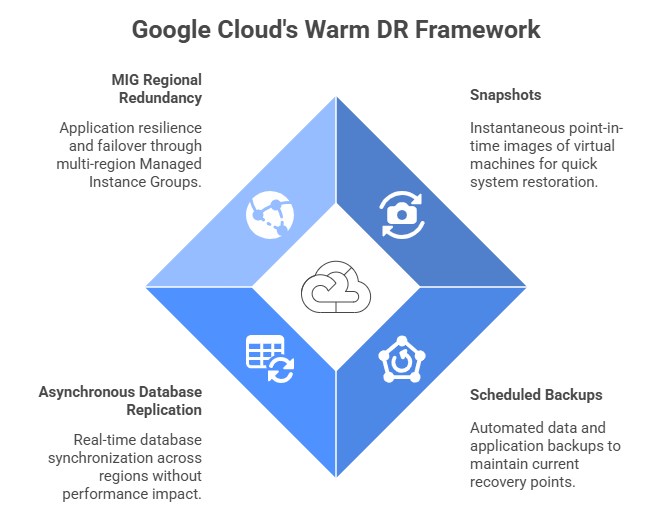
Figure 2: Visual illustration of how Google Cloud supports Warm DR
Warm DR vs Hot DR
| Feature | Warm DR | Hot DR |
| Cost | Warm DR has lower costs because only standby resources are maintained, reducing infrastructure and operational expenses. | Hot DR incurs higher costs because fully active duplicate systems run 24/7. |
| RTO / RPO | Warm DR provides moderate recovery time, and some data loss may occur within the last backup interval. | Hot DR provides minimal recovery time with almost no data loss. |
| Traffic Processing | In Warm DR, the standby environment is passive and does not handle live traffic until failover occurs. | In Hot DR, duplicate systems are active and continuously handle live traffic. |
| Best For | Warm DR is suitable for non-critical applications where some downtime is acceptable. | Hot DR is ideal for mission-critical applications that require continuous availability and minimal disruption. |
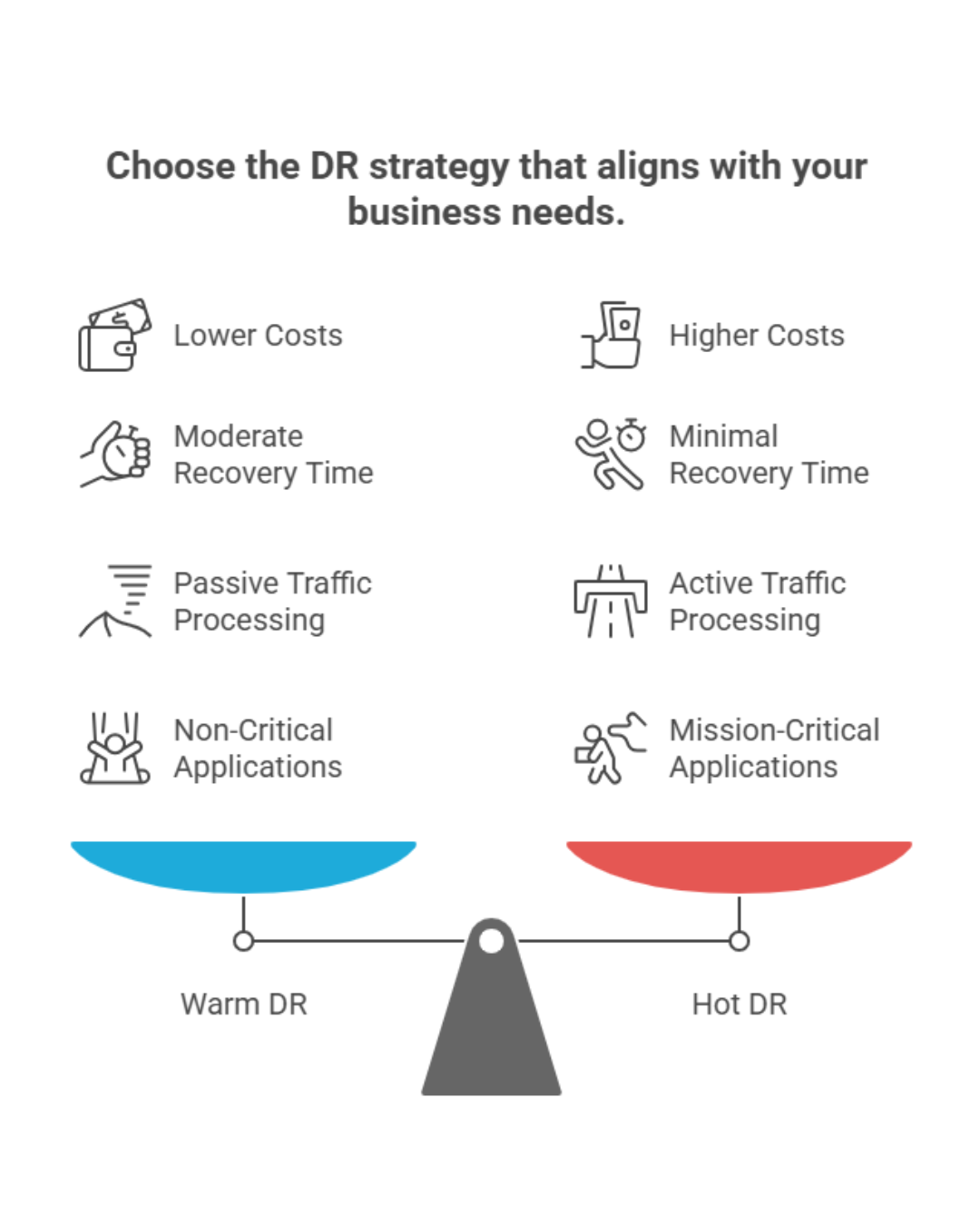
Figure 3: Visual illustration of choosing the right DR strategy between Warm DR and Hot DR
Case Studies
Enabling Business Continuity with Disaster Recovery Implementation: Niveus Solutions designed and implemented a near-real-time Disaster Recovery (DR) solution for a leading microfinance provider, ensuring that critical financial operations remain uninterrupted during system failures or unexpected disruptions. The solution leveraged Google Cloud’s capabilities, such as real-time database replication, high-availability compute, and automated failover, to minimize downtime and prevent data loss. By aligning with stringent compliance and regulatory standards, the DR system not only safeguards business continuity but also strengthens operational resilience and customer trust.
Built Disaster Recovery for Better Compliance and Resilience: Niveus helped a leading fintech client implement a robust DR setup on Google Cloud. We ensured continuous data protection and rapid system recovery by tailoring the approach to different workloads. Critical systems were configured for near-instant failover (Hot DR), while less critical services leveraged cost-effective standby resources (Warm DR). This strategy minimized downtime, safeguarded sensitive financial data, and strengthened operational resilience, demonstrating how a thoughtfully designed DR plan protects both business and customers.
Conclusion
In today’s digital world, downtime isn’t just an inconvenience; it’s a risk to your business and your customers’ trust. Disaster Recovery on Google Cloud lets you stay ahead of disruptions, whether through near-instant Hot DR for mission-critical systems or cost-efficient Warm DR for less time-sensitive workloads.
At Niveus, we’ve helped fintech and microfinance clients turn potential crises into seamless continuity, safeguarding data, minimizing downtime, and boosting operational resilience. A smart DR strategy isn’t just about recovery; it’s about keeping your business unstoppable.
Read our whitepaper on Disaster Recovery on Google Cloud to explore how Hot and Warm DR strategies, real-time replication, and failover orchestration can keep your business resilient and minimize downtime.