Siloed data, manual bottlenecks, and slow decisions are slowing down companies. While traditional RPA and rule-based systems struggle with real-world complexity. The issue lies in automation that cannot think, adjust, or manage complex workflows. This is where the change starts. With platforms like Google Cloud, businesses are moving from basic automation to AI agents that can think, act, and improve operations on a large scale. This blog explores why Google Cloud is becoming the top platform for AI agents, how they solve real business challenges, and what it takes to achieve ROI at scale.
Take your AI beyond experimentation into measurable ROI
Industry studies show that 85% of organizations have already integrated AI agents into at least one workflow, signaling a rapid shift from experimentation to real-world adoption. Early adopters aren’t just using AI; they’re gaining a competitive edge through faster decisions and better operations.
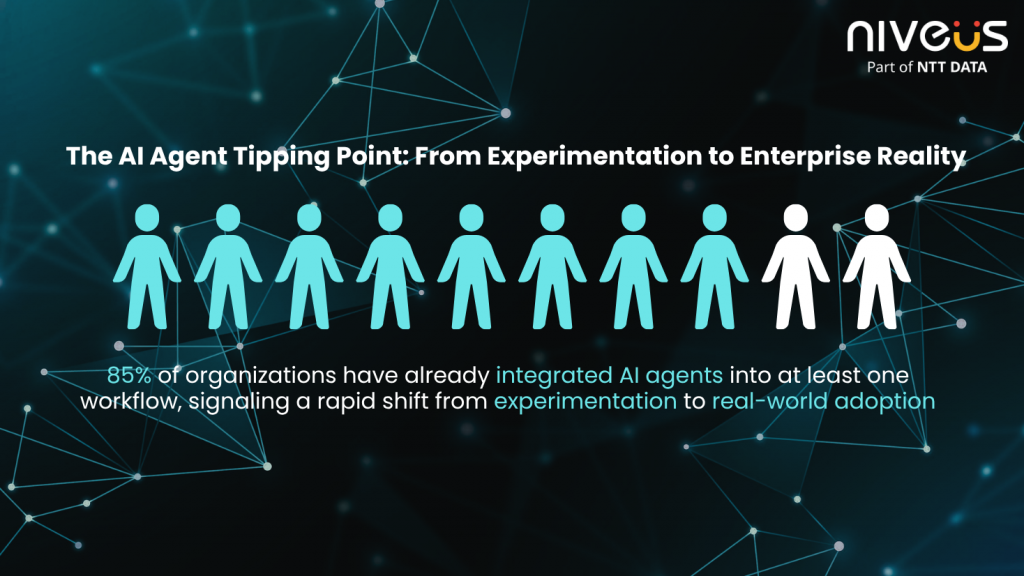
Fig 1: Visual Illustration of The AI Agent Tipping Point: From Experimentation to Enterprise Reality
Why Google Cloud Is the Enterprise Platform for AI Agents
Scaling AI agents isn’t only a technology problem, but one of data and integration. In fact, more than 70% of AI projects fail to get past the pilot stage. Often due to siloed systems and a lack of governance. Google Cloud solves this with a unified AI + data stack, allowing enterprises to go from experimentation to production at scale.
Unified AI + Data Stack
Organizations that effectively leverage data are 23x more likely to acquire customers and 19x more likely to be profitable, but only if AI, data, and orchestration work together seamlessly.
| Business Capability | Google Cloud Enabler |
| Build AI agents | Vertex AI Agent Builder |
| Advanced reasoning models | Vertex AI (Gemini) |
| Enterprise data grounding | BigQuery |
| API orchestration | Apigee |
| Security operations automation | Chronicle |
Because this stack is tightly integrated, AI agents can operate across systems, data, and workflows, rather than silos. Plugging directly into platforms like SAP, Salesforce, ServiceNow, and Google Workspace, they accelerate adoption without disrupting existing operations.
Built for Enterprise Governance
As AI adoption scales, so do risks, 78% of organizations cite AI governance and compliance as a top concern. Google Cloud addresses this with:
- IAM-based access control for secure, role-based operations
- Auditability and traceability of agent decisions
- Compliance-ready architecture with data residency controls
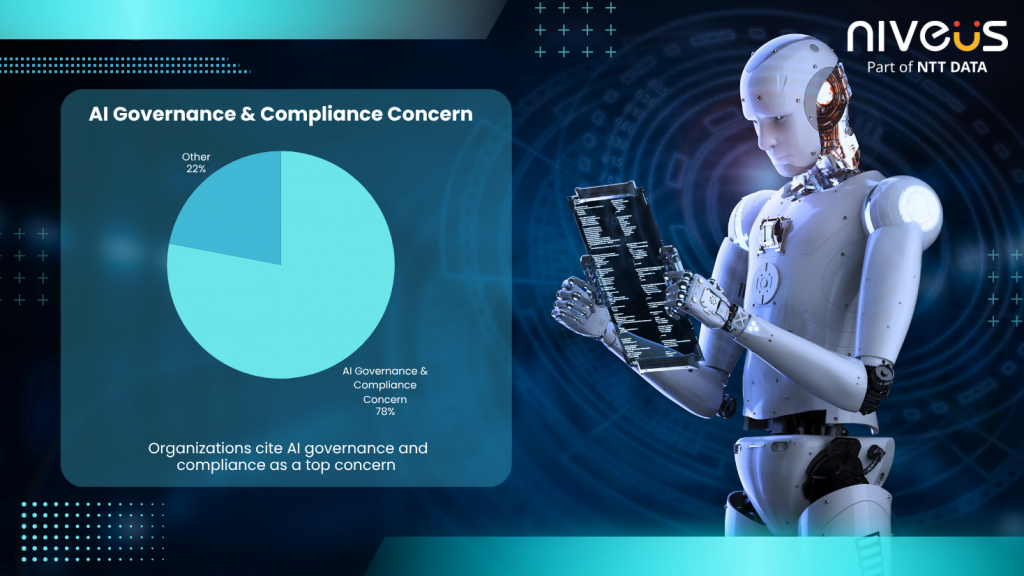
Fig 2: Visual Illustration of Organizations that Cite AI Governance & Compliance as a Top Concern
This ensures enterprises can scale AI agents securely, responsibly, and with full accountability.
How AI Agents Solve Real Business Problems
AI agents add value where it matters most, eliminating bottlenecks, speeding up decisions, and improving outcomes. They do more than just automate tasks; they understand context, make decisions, and act across systems.
- Customer Operations: Support teams are experiencing a surge of customer queries, making it difficult to respond quickly and efficiently.
What agents do: An AI agent reads each request, understands it, and automatically sends it to the right team or system
The impact: Lower cost-to-serve and faster resolutions - Data & Decision Intelligence: Intelligence Business teams have to mostly rely on data teams for finding answers, and writing complex queries takes time.
What agents do: Turn natural language into queries over BigQuery
The impact: Real-time insights and rapid decision-making - Order and Finance Workflows: Manual checks and approvals make order and finance processes slower and more prone to errors.
What agents do: Validate data, handle exceptions, and move workflows forward automatically
The impact: Faster processing and reduced manual effort - Security Operations: Teams are flooded with alerts, making it hard to respond quickly
What agents do: Investigate and prioritize alerts using platforms like Chronicle
The impact: Faster response times and reduced risk exposure - Marketing & Revenue Operations: Campaigns lack personalisation and take too long to launch.
What agents do: Generate and personalize campaigns at scale
The impact: Faster go-to-market and higher engagement
ROI & Business Impact: The Numbers That Matter
For AI agents to gain real traction, business analysts must translate capabilities into clear business outcomes, measured, tracked, and aligned to enterprise goals.
- Quantifying ROI
This is where impact becomes tangible:
- Cost reduction per workflow: Lower operational costs through automation
- Cycle time compression: Faster completion of tasks and processes
- Error reduction: Improved accuracy in decision-making
- Productivity per FTE: More output with the same workforce
- Revenue uplift or risk mitigation: Increased revenue or reduced business risk
- Model Risk & Accountability
As AI agents make decisions, control and transparency are critical:
- Define who owns decisions made by AI
- Establish testing and validation frameworks before deployment
- Track prompt and model changes (version control)
- Continuously monitor performance and accuracy
- Human-in-the-Loop Strategy
Not everything should be automated:
- Set clear boundaries for automation
- Keep humans involved in high-risk or sensitive decisions
- Change Management
Adoption determines success:
- Secure leadership (C-suite) support
- Ensure alignment across teams (business + tech)
- Enable teams with training and tools to work with AI agents
How to Get Started: A BA’s Practical Roadmap
AI agents don’t need a massive transformation to begin; they need a focused, structured approach. Here’s how business analysts can drive adoption step by step.
Step 1: Identify High-Impact Workflows
Start where AI can deliver immediate value:
- High-volume tasks that consume time
- Decision-heavy processes that need judgment
- Measurable outputs where impact can be tracked
Focus on use cases where inefficiencies are already visible.
Step 2: Define Success Metrics Early
Before building anything, define what success looks like:
- Financial KPIs (cost savings, revenue impact)
- Operational SLAs (speed, turnaround time)
- Risk metrics (error rates, compliance)
You cannot scale something if you are unable to measure it.
Step 3: Launch a 90-Day Pilot
Start small, but structured:
- Keep the scope narrow and focused
- Use controlled integrations with key systems
- Set up a clear measurement framework
The goal isn’t perfection, it’s proving value quickly.
Step 4: Scale to Multi-Agent Orchestration
Once validated, expand intelligently:
- Move from single-task agents
- To end-to-end autonomous workflows across systems
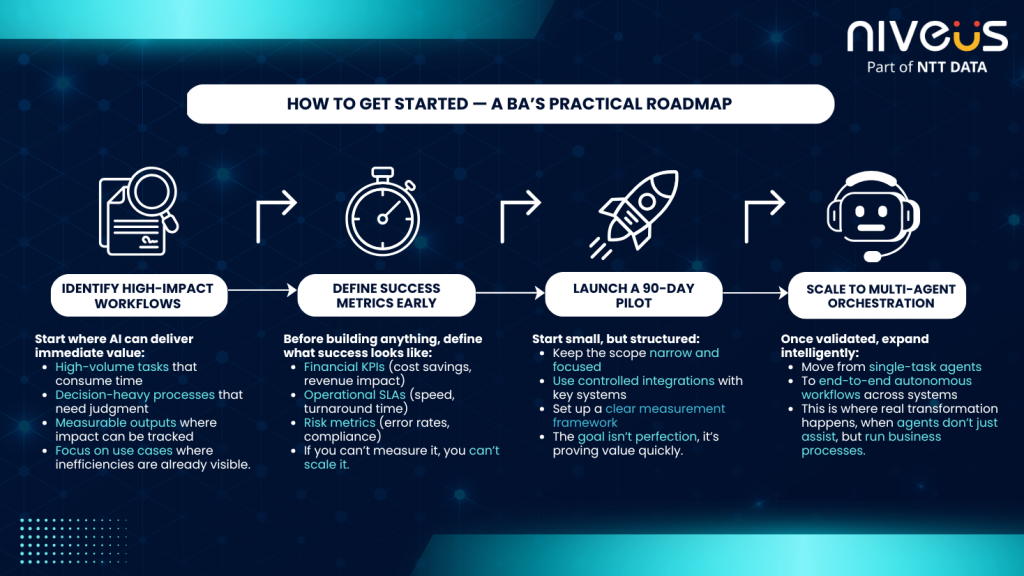
Fig 3: Visual Illustration of How to Get Started: A BA’s Practical Roadmap
This is where real transformation happens, when agents don’t just assist, but run business processes.
Conclusion
The era of basic automation is over; the era of intelligent, autonomous operations has begun. As complexity grows, businesses clinging to manual processes and static systems will fall behind, while those embracing AI agents will move faster, decide smarter, and scale effortlessly. With Google Cloud, this shift isn’t just possible, it’s practical. From data to decisions to execution, AI agents are redefining how work gets done across the enterprise.
The advantage now belongs to those who act early. The question isn’t whether to adopt AI agents; it’s how fast you can turn them into business impact.