As enterprises scale generative AI, chat-based tools still require users to prompt, coordinate tasks, and switch between systems to get work done. Enterprise agents go further by combining AI reasoning, business context, tools, and orchestration to take action and execute work. This blog explores the evolution from chatbots to enterprise agents, how Google’s Gemini Enterprise Agent Platform supports this shift, and how Campaign and Communications Agents bring agentic AI into real-world business processes.
Turn AI into action with enterprise agents.
A study reports that 79% of surveyed senior executives say AI agents are already being used in their enterprises, while 66% of adopters report a significant productivity boost. This signals a broader shift toward more integrated applications of AI agents, from reactive tools that respond to individual requests to systems that can reason, collaborate, and operate across functions and workflows. With the Gemini Enterprise Agent Platform, organizations can build and govern an evolving ecosystem of AI agents, enabling greater integration and agility beyond isolated, single-point interactions.
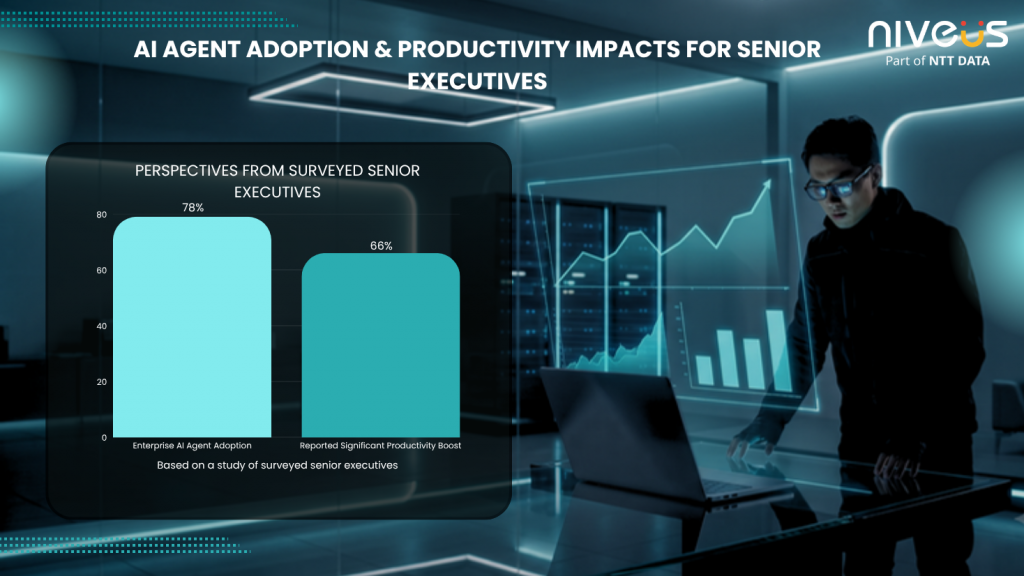
Fig 1: Visual Illustration of AI Agent Adoption & Productivity Impacts for Senior Executives
The Evolution of Enterprise AI
Enterprise AI has evolved from simply finding information to systems that can understand goals, reason with context, and take action. This evolution from Search to Chatbots, AI Assistants, and Enterprise Agents represents a steady advancement in AI capabilities, enabling systems to play a more active role in how work is accomplished.
As AI progresses through these stages, the shift is not simply toward better responses. It is toward systems that can take a more active role in executing and coordinating work.
| Stage | Primary Role | How It Works | Key Limitation / Evolution |
| Traditional Enterprise Search | Finds information | Retrieves documents, records, and knowledge based on user queries | Users must interpret results and decide what to do next |
| Chatbots & Copilots | Answers and assists | Uses conversational interfaces to answer questions, summarize information, and provide contextual support | Primarily reactive and dependent on user prompts |
| AI Assistants | Creates and accelerates | Generates content, analyzes information, drafts reports, and supports individual tasks | Users still coordinate outputs and broader workflows |
| Enterprise Agents | Executes and orchestrates | Understands goals, reasons across multiple steps, uses enterprise data and tools, and coordinates actions | Moves AI toward governed, goal-oriented workflow execution |
As AI progresses through these stages, the shift is not simply toward better responses. It is toward systems that can take a more active role in executing and coordinating work.
Why Traditional Chatbots Fall Short
Traditional chatbots have made enterprise interactions faster and more conversational. However, their capabilities often focus on responding to individual requests rather than managing complete business outcomes. However, as enterprise workflows become increasingly complex and interconnected, the limitations of traditional chatbots become more evident.
- Reactive rather than proactive: Chatbots typically wait for users to initiate interactions and provide instructions. They do not independently plan or coordinate the steps required to achieve a broader business goal.
- Limited business context: While chatbots can use information provided within a conversation or connected knowledge sources, they may lack the persistent organizational context required to understand processes, roles, policies, and dependencies across enterprise systems.
- Limited end-to-end execution: A chatbot may generate an answer, recommendation, or piece of content, but completing a business process often requires multiple actions across applications and systems.
- High dependence on user prompts: Users frequently need to specify requirements, refine prompts, provide additional context, and guide AI through each stage of a task. This leaves the user responsible for orchestrating the overall workflow.
- Collaboration with people: Human-in-the-loop checkpoints enable staff members to evaluate results, authorise crucial actions, handle exceptions, and maintain control when discretion is needed.
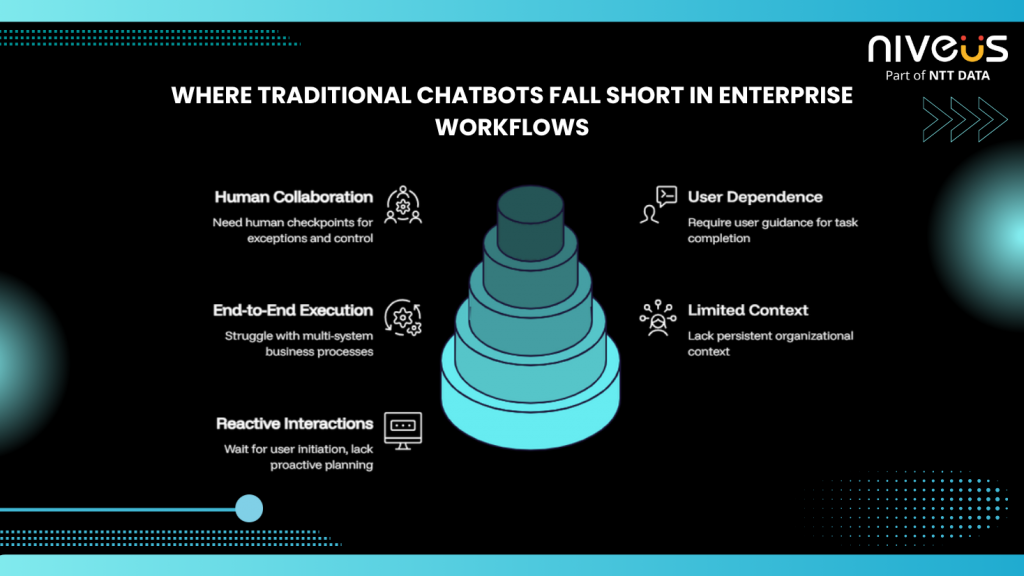
Fig 2: Visual Illustration of Where Traditional Chatbots Fall Short in Enterprise Workflows
These limitations reveal a fundamental gap: responding to a query is not the same as executing a business outcome.
What Makes Gemini Enterprise an Agent Platform
Reports indicate that 52% of executives say their organizations are already leveraging AI agents in production, reflecting a shift from generative AI experimentation toward the integration of agentic capabilities into business processes.
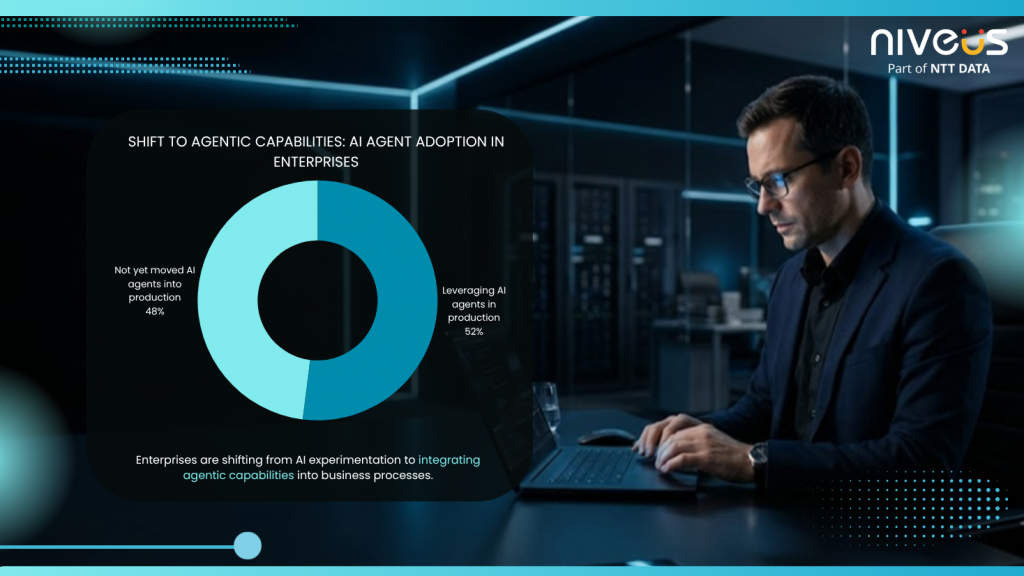
Fig 3: Visual Illustration of Shift of Agentic AI Capabilities in Enterprises
The Gemini Enterprise Agent Platform supports this transition by bringing together the reasoning, context, tools, orchestration, and governance required to move from conversational interactions toward agents designed to accomplish specific business objectives.
- Beyond conversations to task execution: Agents can move beyond answering questions to taking the actions required to complete tasks, coordinating steps across workflows rather than relying on users to manage every interaction.
- Enterprise knowledge and business context: Agents can securely access authorized enterprise data and knowledge sources, enabling decisions and actions to reflect relevant organizational context.
- Tool and application integration: By connecting with enterprise applications, APIs, and tools, agents can access relevant information and perform authorized actions directly within the systems where work takes place.
- Multi-step reasoning and planning: Agents can interpret a goal, reason through the required steps, select appropriate tools, and coordinate multiple actions toward an intended outcome.
- Human-in-the-loop approvals: Human review and approval can be incorporated at critical stages of agentic workflows, balancing automation with oversight for sensitive or high-impact decisions.
- Enterprise-grade security and governance: Identity, access controls, governance, monitoring, and observability give organizations greater control over how agents access information, use tools, and execute actions at scale.
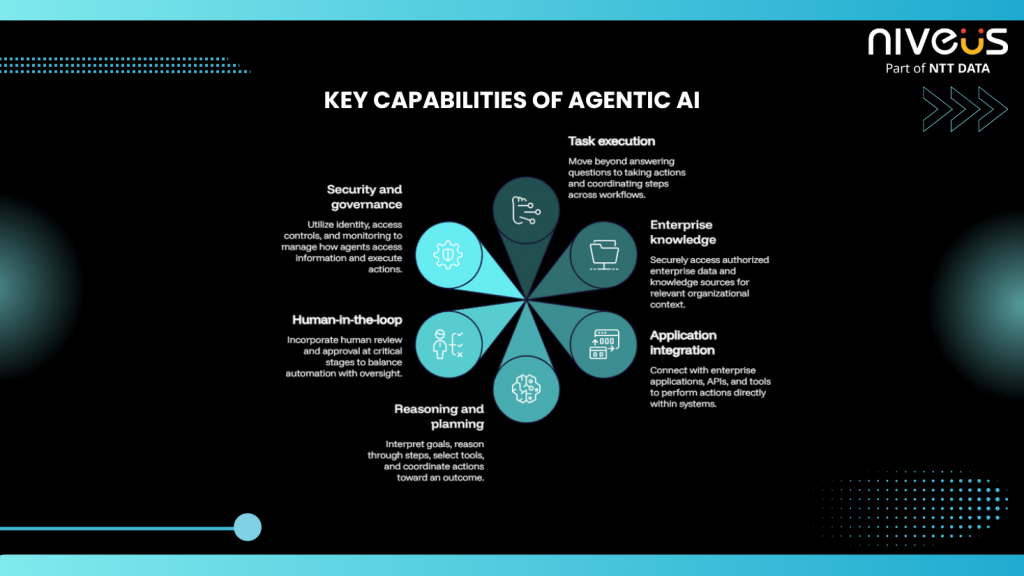
Fig 4: Visual Illustration of Key Capabilities of Agentic AI in Gemini Enterprise Agent Platform
Together, these capabilities move enterprise AI beyond a prompt-and-response model toward goal-driven execution, where AI can help plan, act, and orchestrate work within defined organizational controls.
Understanding Enterprise Agents
Enterprise agents are AI systems that combine reasoning, planning, contextual information, and tools to work toward specific goals. Rather than simply reacting to individual prompts, they can perform tasks required to accomplish an objective, operate across relevant data and systems, track progress, and take appropriate actions.
Where judgment or approval is required, human supervision can remain part of the process.
Key Characteristics of Enterprise Agents
- Goal-oriented execution: Agents work toward defined outcomes, breaking broader objectives into actionable steps rather than waiting for instructions at every stage.
- Workflow orchestration: They coordinate multi-step processes, managing dependencies and sequencing actions across different stages of a workflow.
- Persistent context: Agents retain enterprise and workflow context across interactions, enabling more informed decisions and uninterrupted task execution over time.
- Tool usage: Through authorized integrations, agents can use APIs, applications, databases, and other enterprise tools to retrieve information or perform actions.
- Decision support: Agents analyze available context, evaluate possible next steps, and provide recommendations or take predefined actions within established boundaries.
- Collaboration with people: Human-in-the-loop checkpoints allow employees to review outputs, approve critical actions, manage exceptions, and retain control where judgment is required.
| Capability | Chatbot | AI Assistant | Enterprise Agent |
| Primary role | Answers questions | Assists users with tasks | Works toward defined business goals |
| Execution | Responds to individual requests | Supports task completion | Plans and executes multi-step tasks |
| Context | Primarily conversational | Uses task-specific context | Uses enterprise and workflow context |
| Workflow orchestration | Limited | Mostly user-directed | Coordinates actions across tools and systems |
| Autonomy | Primarily user-driven | User-guided | Configurable within defined guardrails |
| Human role | Initiates and guides interactions | Directs and reviews work | Supervises, approves, and handles exceptions |
Real-world examples/Use cases
The most concrete way to understand this shift is to look at what enterprise agents actually do in practice, not just what they’re theoretically capable of.
Executive Intelligence Agent: Executives spend a significant part of the day reconstructing context, scanning email, Teams, meeting schedules, and scattered documents just to figure out what actually needs attention. The Executive Intelligence Agent takes on that work directly, orchestrating across enterprise connectors, Outlook, Teams, SharePoint, and OneDrive to produce a daily brief of top priorities, open risks, and pending decisions, as well as a decision-ready prep pack ahead of every meeting. It extends outward too, using Deep Research to scan trusted external sources for market, competitor, and regulatory signals mapped to active priorities. Throughout, it drafts emails, invites, and agendas but never sends or schedules on its own; every draft waits for review and approval. It’s a clear example of multi-step reasoning and tool orchestration combined into a single consolidated view, so each day and each meeting begins already prepared.
Why Enterprises Are Moving Toward Agentic AI
Enterprises are looking beyond prompt-based interactions toward systems that can support end-to-end outcomes. Businesses applying AI automation in advanced ways have reported improvements in operational performance of up to 40%, highlighting the potential value of moving beyond simply asking questions and receiving answers. Agentic AI enables enterprises to delegate routine coordination and orchestration tasks while securely connecting the processes, tools, and data required to accomplish specific objectives within defined guardrails.
This shift can reduce the need for employees to continuously manage prompts and coordinate disconnected AI functions. Instead, enterprises can focus more on desired outcomes while enabling agents to work together within established organizational parameters. The broader implication is a change in the role AI plays within the enterprise: from a tool employees interact with at individual points in a workflow to a system capable of coordinating work across the workflow.
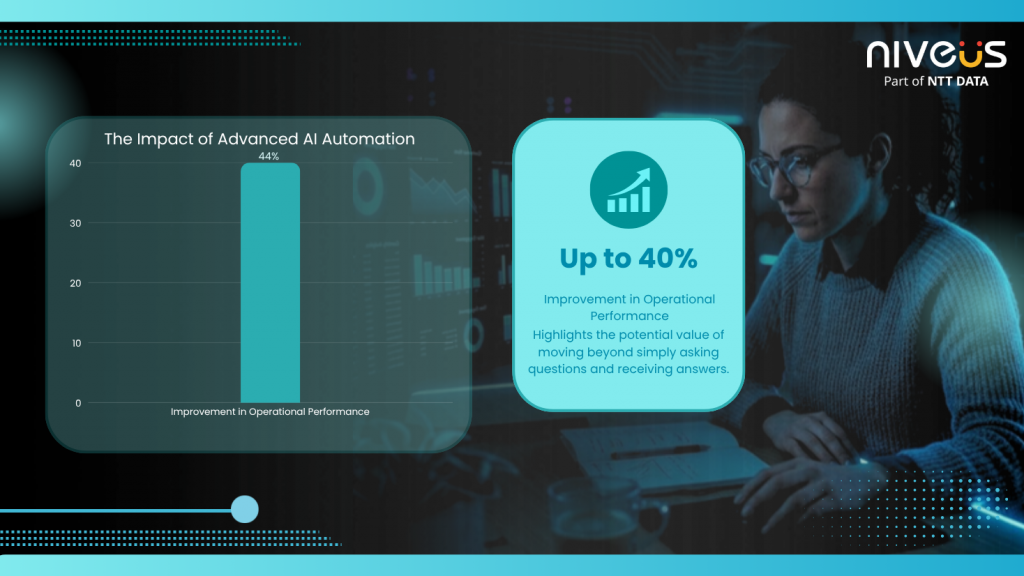
Fig 5: Visual Illustration of The Business Impact of Advanced AI Automation
Conclusion
The next evolution of enterprise AI is not about asking better questions. It is about turning answers into action. The Gemini Enterprise Agent Platform represents this shift by bringing together reasoning, context, tools, orchestration, and governance to move generative AI from an assistant toward an orchestrator of outcomes. Solutions such as Campaign and Communications Agents demonstrate the direction of this evolution: AI that can do more than assist; it can act within defined enterprise controls. The question is no longer only what AI can answer, but what it can help enterprises achieve.